What Is a Cap Rate in Multifamily Real Estate and How Does It Affect Valuation

A small change in cap rate can move an apartment valuation by hundreds of thousands or millions of dollars. That is why the metric deserves more than a quick definition.
In multifamily real estate, cap rate is one of the most common ways buyers, sellers, lenders, and asset managers translate income into value. It helps compare properties with different unit counts, rents, expense structures, and locations. It also creates a shared language for pricing risk.
Still, cap rate is often misunderstood. It is not a guaranteed return. It is not the same as cash flow after debt service. It does not tell the full investment story on its own.
This article explains what a cap rate is, how the formula works, how it affects apartment valuation, and how it differs from ROI and cash-on-cash return.
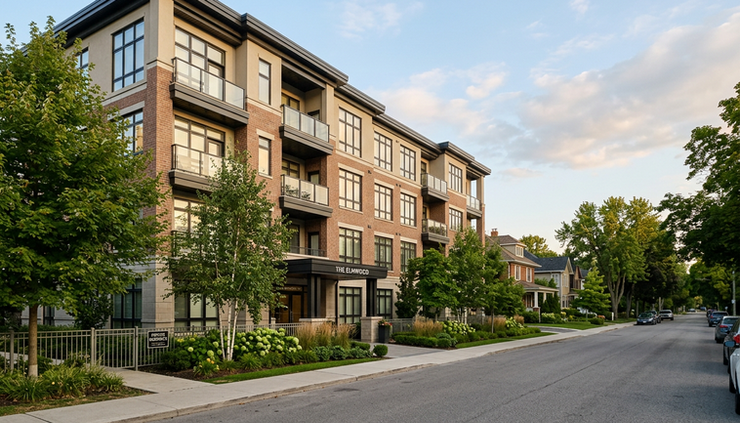
What is a cap rate in multifamily real estate?
A capitalization rate, usually called a cap rate, measures the relationship between a property’s net operating income and its market value or purchase price.
The basic formula is:
Cap rate = Net operating income ÷ Property value
If an apartment property produces $500,000 in annual NOI and is valued at $10,000,000, the cap rate is:
$500,000 ÷ $10,000,000 = 0.05, or 5.0%
Put simply, cap rate shows the unlevered income yield of a property at a given value. “Unlevered” means it does not include the effect of mortgage financing, interest expense, principal payments, or investor-level tax considerations.
That distinction matters. Cap rate focuses on the property’s operating performance before debt. It is a valuation and comparison tool, not a complete measure of an investor’s actual return.
For a deeper look at the income side of the equation, Halberd Agency’s guide to net operating income in real estate explains how NOI is built from revenue and operating expenses.
The two ways investors use the formula
The formula can be used in two directions.
To calculate the cap rate
Use this when the property value or purchase price is known.
NOI ÷ property value = cap rate
To estimate value
Use this when a market-supported cap rate and stabilized NOI are known.
NOI ÷ cap rate = estimated value
That second version is where cap rates have a direct impact on valuation. If NOI stays the same, a lower cap rate implies a higher value. A higher cap rate implies a lower value.
This inverse relationship is one of the most important concepts in income-property valuation.
How the NOI divided by property value formula works
NOI is the annual income a property produces after normal operating expenses, but before debt service, capital expenditures, depreciation, income taxes, and investor distributions.
For multifamily properties, NOI usually starts with rental revenue and other income, then subtracts vacancy, concessions, bad debt, payroll, repairs and maintenance, utilities, insurance, property taxes, management fees, and other operating expenses.
A simplified structure looks like this:
Income statement item | Example amount |
Gross potential rent | $1,200,000 |
Less vacancy, concessions, and credit loss | ($90,000) |
Effective rental income | $1,110,000 |
Other income | $60,000 |
Total operating revenue | $1,170,000 |
Operating expenses | ($670,000) |
Net operating income | $500,000 |
Using that NOI, the cap rate depends on the value assumption:
Property value | NOI | Cap rate |
$9,000,000 | $500,000 | 5.56% |
$10,000,000 | $500,000 | 5.00% |
$11,000,000 | $500,000 | 4.55% |
The property did not change in this table. The NOI is the same in every row. What changes is the price an investor is willing to pay for that income stream.
That is the core valuation function of a multifamily cap rate.

A realistic apartment valuation example
Assume a 72-unit apartment community has the following stabilized annual operating profile:
Metric | Annual amount |
Gross potential rent | $1,209,600 |
Vacancy and credit loss | ($72,576) |
Concessions | ($12,000) |
Laundry, parking, pet, and other income | $48,000 |
Effective gross income | $1,173,024 |
Operating expenses | ($704,000) |
Net operating income | $469,024 |
Now assume buyers in that submarket are underwriting the property at a 5.75% cap rate, based on their assessment of income durability, property condition, rent growth prospects, financing conditions, and comparable sales.
The value estimate would be:
$469,024 ÷ 0.0575 = $8,156,939
Rounded, the indicated value is about $8.16 million.
If the same property were valued at a 6.25% cap rate, the estimate would be:
$469,024 ÷ 0.0625 = $7,504,384
At a 5.25% cap rate, the estimate would be:
$469,024 ÷ 0.0525 = $8,933,790
Cap rate assumption | NOI | Indicated value |
5.25% | $469,024 | $8,933,790 |
5.75% | $469,024 | $8,156,939 |
6.25% | $469,024 | $7,504,384 |
This example shows why cap rate selection is so sensitive. A 50-basis-point change can materially affect pricing.
The cap rate assumption should not come from a rule of thumb. It should reflect the property’s income quality, physical condition, location, buyer demand, cost of capital, and market expectations.
Why stabilized NOI matters
A valuation based on cap rate usually relies on normalized or stabilized NOI. That may differ from the trailing 12-month NOI if the property has unusual expenses, recent rent changes, lease-up activity, deferred maintenance, or temporary vacancies.
For example, if occupancy dipped because several units were offline for renovation, trailing income may understate the property’s stabilized earning capacity. By contrast, if rents were temporarily elevated by one-time fees or unusual reimbursements, trailing NOI may overstate it.
Halberd’s article on multifamily occupancy is useful background because occupancy directly affects effective rental income, vacancy loss, and underwriting confidence.
What cap rates say about risk and market expectations
Cap rates reflect how the market prices income. They are influenced by property-level risk, local market strength, capital market conditions, and expectations about future growth.
A lower cap rate usually means investors are willing to pay more for each dollar of current NOI. A higher cap rate usually means investors require more current income relative to price.
That does not mean one is automatically better than the other. A low cap rate may reflect a strong location, durable demand, newer construction, stable operations, or expected rent growth. A higher cap rate may reflect greater perceived risk, weaker income durability, needed capital improvements, or less buyer competition.
Location affects the durability of income
Location influences cap rates because it affects renter demand, rent growth, operating risk, and resale liquidity.
Properties in areas with diverse employment, limited new supply, strong household formation, and consistent renter demand often trade at lower cap rates than properties in less liquid or more volatile markets. Investors may accept a lower current income yield if they believe the income stream is more durable or more likely to grow.
Location is not just the city or metro area. It also includes neighborhood quality, access to jobs, school district perception, transit, walkability, crime patterns, competing supply, and the tenant base.
Interest rates affect required returns
Interest rates influence cap rates because they affect the cost and availability of debt. When borrowing costs rise, buyers may need higher yields to make the capital stack work. That can put upward pressure on cap rates and downward pressure on values.
The relationship is not mechanical. Cap rates do not always move point-for-point with interest rates. Rent growth expectations, lender appetite, equity demand, and transaction volume also matter.
Still, higher financing costs can reduce the price buyers are willing to pay for the same NOI, especially when debt service coverage is tight.
Property condition changes the risk profile
Two properties with the same NOI can deserve different cap rates if their physical condition differs.
A renovated property with updated systems, clean unit interiors, and manageable maintenance needs may support more aggressive pricing. An older asset with roof issues, aging mechanical systems, outdated interiors, or high turnover risk may require a higher cap rate.
The reason is simple. Cap rate excludes capital expenditures. If a property needs major nonrecurring investment, the buyer must account for that outside the NOI calculation. A cap rate based only on current NOI can be misleading if the physical plant is deteriorating.

Market expectations influence today’s pricing
Cap rates include expectations about the future, even though the formula uses current or stabilized NOI.
If investors expect rents to grow, expenses to remain controlled, and occupancy to stay strong, they may accept a lower current cap rate. If they expect rent pressure, expense growth, tax reassessment, insurance increases, or new supply competition, they may require a higher cap rate.
Rental revenue quality plays a major role. A rent roll supported by consistent collections and limited concessions gives buyers more confidence than one built on aggressive asking rents with weak collection history. For more context, see Halberd Agency’s article on rental revenue in multifamily real estate.
Cap rate is not ROI or cash-on-cash return
Cap rate, ROI, and cash-on-cash return all relate to investment performance, but they answer different questions.
Metric | What it measures | Includes debt financing? | Common use |
Cap rate | NOI relative to property value | No | Valuation and property comparison |
ROI | Total return relative to total investment cost | Sometimes, depending on definition | Broad investment performance |
Cash-on-cash return | Annual before-tax cash flow relative to cash invested | Yes | Equity-level income return |
Cap rate measures property income before financing
Cap rate uses NOI before debt service. It does not account for loan proceeds, interest rate, amortization, closing costs, capital reserves, or investor tax position.
That makes it useful for comparing properties independent of financing. It also makes it incomplete as a measure of actual investor return.
ROI is broader and depends on the calculation
Return on investment can include income, appreciation, sale proceeds, debt paydown, and capital costs. Because ROI is used in different ways, the definition should always be clear.
For example, one investor may calculate ROI based on total profit after sale. Another may use annual operating income divided by total project cost. Those are different calculations.
Cap rate is narrower and more standardized than ROI.
Cash-on-cash return focuses on equity cash flow
Cash-on-cash return measures annual before-tax cash flow after debt service divided by the actual cash invested.
For example, if an investor contributes $2,000,000 of equity and receives $120,000 in annual before-tax cash flow after debt service, the cash-on-cash return is 6.0%.
That calculation depends heavily on financing. A lower interest rate, interest-only period, higher leverage, or longer amortization can change cash-on-cash return even when the property’s NOI and cap rate stay the same.
This is where many mistakes occur. NOI is not cash flow after debt service. NOI sits above the financing line. Cash flow after debt service sits below it.
How cap rates affect multifamily valuation decisions
Cap rates affect valuation in three practical ways.
They translate income into price
For stabilized apartment assets, cap rate is one of the clearest ways to convert NOI into an estimated value.
If NOI rises and the cap rate stays constant, value rises. If NOI falls and the cap rate stays constant, value falls. If NOI stays constant but the market cap rate expands, value falls. If NOI stays constant but the market cap rate compresses, value rises.
That relationship helps asset managers evaluate whether value creation is coming from better operations, market movement, or both.
They frame acquisition discipline
A buyer can use cap rate to test whether a purchase price aligns with the income stream and risk profile.
For example, if a property’s trailing NOI is low because of poor collections, high vacancy, or below-market rents, the buyer needs to decide whether the issue is temporary, correctable, or structural. A cap rate on current NOI may not capture the full opportunity or the full risk.
The underwriting should show the bridge between current NOI, stabilized NOI, required capital, and exit assumptions.
They inform hold and sell decisions
Owners can also use cap rates to evaluate disposition timing.
If NOI has improved and market cap rates remain favorable, the property may command a higher value. If cap rates have expanded because of financing conditions or market uncertainty, NOI growth may not fully translate into higher pricing.
This is why cap rate should be read together with rent trends, occupancy, expense growth, capital needs, debt maturity, and investor demand.

The main takeaway for multifamily valuation
Cap rate is a concise way to connect NOI and value. It helps investors compare properties, test pricing, and understand how the market is valuing apartment income.
The formula is simple:
Cap rate = NOI ÷ property value
The implications are more complex. Cap rates reflect risk, location, financing conditions, property condition, income quality, and future expectations. They can explain major valuation differences between similar-looking assets, but they should not be treated as guaranteed returns.
A sound multifamily valuation starts with accurate NOI, realistic operating assumptions, and a market-supported cap rate. From there, the analysis should also account for debt, capital expenditures, taxes, hold period, and exit strategy.
Used correctly, cap rate is not the whole answer. It is the starting point for disciplined apartment valuation.


