Creative Briefs That Win Campaigns A Practical Guide to Clear Goals and Better Ideas

A weak brief makes creative teams guess. A strong brief gives them a target, a reason to care, and enough room to solve the problem in a fresh way.
That is why effective creative briefs matter so much. They do not replace imagination. They protect it. When the brief is clear, writers, designers, strategists, producers, and clients can judge ideas against the same goal instead of personal taste.
This guide shows how to write a practical creative brief that leads to sharper campaigns, fewer rounds of revision, and better ideas.

1. Define the problem before asking for ideas
Start with the business or communication problem, not the deliverable.
A request like “we need a video” is not a brief. It is an output. A better starting point is “new customers do not understand why this subscription costs more than cheaper options.” That gives the creative team something to solve.
A useful problem statement should answer three questions.
What is happening now?
What needs to change?
What is stopping that change?
For example, a meal delivery company might write:
Busy parents know they need easier dinners, but they believe meal kits still take too much prep.
That one sentence gives the creative team a real tension. The campaign is not just about showing food. It is about proving that dinner can feel manageable.
2. Write one clear objective
Campaigns get messy when a brief tries to achieve too many things at once. Awareness, trial, trust, loyalty, and sales can all matter, but one should lead.
A strong objective is specific enough to guide creative choices. It should make clear what success looks like.
Weak objective:
Make people excited about our product.
Stronger objective:
Help first-time buyers understand that the product is simple to use without expert knowledge.
The stronger version can shape the work. It suggests demonstrations, plain language, before-and-after scenarios, and proof points. It can also help teams reject ideas that are clever but off target.
One main objective creates creative focus. Supporting goals can stay in the brief, but they should not compete with the main job.
3. Get specific about the target audience
“Everyone” is rarely useful. Even “millennials” or “small business owners” can be too broad. A good brief describes the people the campaign needs to reach in human terms.
Include the basics if they matter, such as age range, location, income, role, or life stage. Then add the details that shape the message.
What do they already believe?
What do they misunderstand?
What pressures are they under?
What language do they use?
What would make them hesitate?
What would make them feel seen?
For a fitness app, “adults ages 25 to 40” is thin. “People who want to exercise but feel embarrassed starting again after a long break” is much more useful. It points toward encouragement, privacy, small wins, and low-pressure onboarding.
Strong audience insight helps creative work feel relevant instead of generic.
4. Name the key message and the reason to believe
The key message is the single idea the audience should take away. It should be short, plain, and tied to the objective.
A good way to test it is to ask, “If someone remembers only one thing, what should it be?”
For a home battery product, the key message might be:
Keep essential power running when the grid goes down.
The reason to believe might include product features, customer experience, demonstrations, expert support, or a simple comparison. The creative team does not need every technical detail. They need the proof that makes the message credible.
Keep this section tight. Too many proof points can blur the idea. Pick the ones with the most persuasive power.
5. Set the tone without writing the campaign
Tone helps teams understand how the work should feel. It should not trap them into one execution.
Avoid vague tone words like “premium,” “fun,” or “bold” unless you explain what they mean in context. Better briefs use contrast.
For example:
Confident, not arrogant
Simple, not childish
Urgent, not alarmist
Warm, not sentimental
Playful, not silly
Smart, not technical
This gives the team boundaries while leaving room for interpretation.
A strong brief also says what to avoid. If the category is full of fear-based messaging, and the brand wants to stand apart, say so. If past campaigns sounded too formal, name that too.

6. Add inspiration sources with a clear purpose
Inspiration can help, but only when the brief explains why each reference matters. A folder of random links can confuse the team.
Use inspiration sources to show:
A pacing style
A type of humor
A visual texture
A narrative structure
A feeling the work should create
A category convention to avoid
For instance, a nonprofit brief might include a documentary photo series because it treats people with dignity and restraint. A snack brand brief might include a short film because the timing feels quick and surprising.
The point is not to copy. The point is to help the team understand the creative standards and emotional territory.
7. Give the team the real constraints
Constraints can improve ideas when they are clear early. They prevent wasted time and keep concepts buildable.
Include practical details such as:
Required formats and channels
Mandatory copy or legal language
Budget range
Timeline
Approval stages
Production limits
Accessibility needs
Existing assets that must be used
Do not bury these in a long email thread. Put them in the brief. If a campaign must work without sound, that changes the idea. If a shoot is not possible, that changes the idea. If the call to action is fixed, that changes the idea.
Clear limits help the team spend energy where it counts.
8. Show what a strong brief can do
A strong brief does not guarantee a great campaign, but it raises the odds. It turns feedback from “I don’t like it” into “this does not answer the audience hesitation.” That shift can save rounds of revision and protect brave ideas.
Here are three simple examples.
The unclear brief
A regional coffee brand asks for “a fresh campaign that gets younger people interested.”
Likely output: trendy visuals, broad slogans, and lots of guessing.
The stronger brief
Young commuters pass our cafes every morning but assume local coffee takes longer than national chains. Show that they can get a high-quality drink fast without changing their routine.
Likely output: quick morning scenes, mobile order messaging, proof of speed, and a tone that respects busy people.
The impact
The creative work now has a job. The team can create concepts around time pressure, routine, local pride, and quality. The client can judge ideas against the behavior they want to change.
9. Use a simple creative brief framework
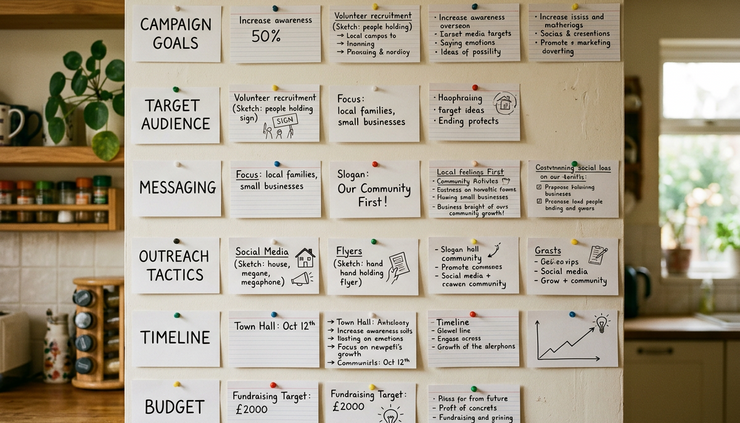
A useful creative brief does not need to be long. In most cases, one or two pages is enough if the thinking is sharp.
Use this framework as a starting point:
1. Background
What context does the team need before they begin?
2. Problem
What needs to change, and what is getting in the way?
3. Objective
What is the main outcome the campaign should support?
4. Target Audience
Who is the work for, and what do they currently think or feel?
5. Key Message
What should the audience remember?
6. Reason to Believe
What proof makes the message credible?
7. Tone and Personality
How should the work feel, and what should it avoid?
8. Inspiration Sources
What references help explain the desired direction?
9. Deliverables and Constraints
What must be made, by when, and within what limits?
10. Success Measures
How will the team know the campaign worked?
The best briefs are clear, selective, and honest. They do not include every possible detail. They include the details that help people make better decisions.
What success looks like
A winning brief creates alignment before the creative work begins. The team understands the problem. The objective is clear. The audience feels specific. The message has proof behind it. The inspiration points in a useful direction.
When that happens, the campaign has a stronger foundation. Ideas get sharper. Feedback gets easier. The final work has a better chance of doing what it was meant to do.
Start the next project by writing the brief as carefully as the campaign deserves. Better inputs lead to better ideas, and better ideas lead to stronger campaigns.


